Exploring Diaries, Letters & Life Stories - eBooks
25 Books foundExploring Diaries, Letters & Life Stories
This category gathers first-person narratives—journals, letters, and autobiographical sketches—that offer intimate views of historical moments, social conditions, and personal development. The authors write from specific circumstances: a plantation tutor in Virginia, a Civil War soldier, a Washington journalist.
Why these works belong together
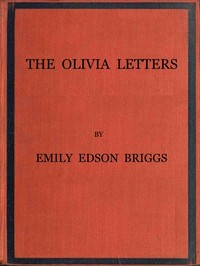
Each text is a primary source that captures a voice and a moment. Philip Vickers Fithian's Journal and Letters records his year as a tutor at Nomini Hall in 1773-1774, observing Virginia plantation life from the perspective of a Northerner. Emily Edson Briggs's The Olivia Letters offers newspaper columns on Washington D.C. politics and society from the 1860s onward. Octavia Hill's Life as Told in Her Letters reveals her thoughts on housing reform and philanthropy. These works share a documentary impulse and a personal lens.
Recommended books
Fithian's journal offers a firsthand view of Virginia plantation life through precise observations of daily routines and the Carter family's habits, filtered through his own reactions as a Northern outsider. A unique window into colonial society.
Emily Edson Briggs, writing as 'Olivia,' provides firsthand observations of Washington D.C. politics, society, and architecture, with a focus on suffrage debates and congressional scenes. Her columns capture the capital's evolving character.
Octavia Hill's letters, edited by C. Edmund Maurice, reveal her thoughts on housing reform, philanthropy, and personal faith, as well as the practical challenges of her work in London. A candid self-portrait of a social reformer.
How this category differs
Unlike "Wars, Revolutions & Nations," which focuses on conflict, this category emphasizes everyday life and personal reflection. It shares with "Exploring Essays, Criticism & Ideas" the first-person voice, but here the mode is narrative and documentary rather than argumentative.
Classification limitation
Some works in this category—like Irvin S. Cobb's A Plea for Old Cap Collier or Finley Peter Dunne's Mr. Dooley's Philosophy—are humorous essays rather than personal narratives. Their placement here reflects their use of a persona or a conversational voice, but readers may find them more at home in the essays category.