1

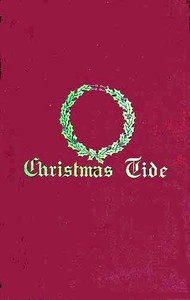
Christmas-Tide — Story, Setting & Ideas
(0 User reviews)
2198
Project Gutenberg
2013
Not confirmed
Christmas stories; Christmas
Readers of public-domain and historical texts
Project Gutenberg digital edition
en
Edition facts
Words
50,929
Reading time
222 min
Text sections
5
For Christmas-Tide — Story, Setting & Ideas, the stored edition analysis reports 50,929 words, 3 hr 42 min estimated reading time, and 5 detected text sections.
The text analysis averages about 18.4 words per sentence, while the detected sections provide another way to judge how the source is divided.
Project Gutenberg metadata also associates the work with “Christmas stories,” connecting these edition facts with the source record’s subject description.
Source:
Project Gutenberg record #41894
Elizabeth Harrison's Christmas-Tide combines practical advice on children's toys and holiday celebration with Charles Dickens's 'A Christmas Carol,' offering a dual perspective on Christmas through educational theory and classic fiction.
Editorial Edition Score
4.7/5
★★★★★
★★★★★
Calculated from edition completeness, EPUB availability, text structure and catalogue metadata. Not a user rating.
How this score is calculated
- Description quality20 pts
- Title & short description10 pts
- Source metadata20 pts
- Text length15 pts
- Chapters / structure15 pts
- EPUB file integrity20 pts
Total of 100 points, scaled to a 2.5-5.0 range. Editions with an empty description or a missing EPUB file are not scored.
Edition quality
Read the Text
Murillo had left upon canvas. This is but one instance that great thoughts do make impressions upon the mind of the child.
CO-PRINCIPAL OF THE CHICAGO KINDERGARTEN COLLEGE
PUBLISHED BY CHICAGO KINDERGARTEN COLLEGE 10 VAN BUREN STREET CHICAGO
COPYRIGHTED 1902 BY ELIZABETH HARRISON
DEDICATED TO MY FATHER FROM WHOSE HEART AND LIFE AGE CANNOT BANISH THE PERPETUAL CHRISTMAS-TIDE
I. CHRISTMAS PRESENTS 9
II. THE PLACE OF TOYS IN THE EDUCATION OF A CHILD 25
III. HOW TO CELEBRATE CHRISTMAS 41
V. A CHRISTMAS EXPERIENCE 55
VI. A CHRISTMAS CAROL 81
VII. CHRISTMAS STORIES FOR THE CHILDREN 219
VIII. A CHRISTMAS STORY FOR GROWN-UPS 237
IX. A CHRISTMAS SONG 247
X. BIBLE STORY OF CHRISTMAS 251
Many mothers are sorely perplexed as the Christmas-tide approaches by the problem of how to select such presents for their children as will help them rather than hinder them in their much-needed self-activity. Let the toys be _simple, strong, and durable, that your child may not gain habits of reckless extravagance and destruction_ which flimsy toys always engender. Remember a few good toys, like a few good books, are far better than many poor toys. Toys in which the child's own creative power has full play are far better than the finished toys from the French manufacturers. In fact, too complex a toy is like too highly seasoned food, too elaborately written books, too old society, or any other mature thing forced upon the immature mind. Your choice should be based, not so much on _what the toy is, as on what the child can do with it_. The instinctive delight of putting their own thought into their play-things instead of accepting the thought of the manufacturer explains why simple toys are often more pleasing to children than expensive ones.
The following list has been compiled from such toys as have delighted as well as have helped the children of kindergarten-trained mothers.
TOYS FOR CHILDREN FROM ONE TO TWO YEARS OF AGE.
Linen picture-books, rubber animals, cotton-flannel animals, rubber rings, worsted balls, strings of spools, knit dolls, rag dolls, rubber dolls, wooden animals (unpainted), new silver dollars.
The kindergarten materials helpful at this period of the child's development are the soft worsted balls of the first gift. When the child begins to listen to sounds and to attempt to articulate, the sphere, cube, and cylinder of the second gift may be given to him. These two gifts, when rightly used, assist the clear, distinct, and normal growth of the powers of observation and aid the little one in expressing himself, even before he has language at his command. Songs and games illustrative of the various ways in which these gifts can be used with a young child, are to be found in the Kindergarten Guides now published. Some very good ones are included in the first year's course of study for mothers of the Kindergarten College. However, almost any mother can invent plays with them for her child.
The kindergarten materials found most helpful for this period of the average child's growth are the second gift and the divided cubes of the third gift. With the latter the child can early be trained into habits of _constructive_ play, rather than _destructive_ play. As all children like to transform and rearrange their toys, this gift is particularly adapted to that purpose. It is simple and easy to handle. Much logical training can be given the child by teaching him to change one form made with his blocks into another, without scattering, or entirely destroying the first form. Many suggestive forms may also be found in the various Kindergarten Guides already published. A series of these are now being prepared by the College for general sale. However, the child himself will oftentimes name the forms made by some name of his own, which should be accepted by the mother. The wooden tablets, sticks, rings, and points of the kindergarten can also be used with a child from three to four years of age though they are, as a rule, less satisfactory than the blocks. The second gift beads furnish an almost exhaustless amusement for some children at this stage of their growth. A long linen shoe-string with a firm knot tied at one end has been found to be the most serviceable kind of a string on which to string the beads. Knowledge of color, form, and number are also incidentally taught the child by these beads.
Elizabeth Harrison's Christmas-Tide opens with a striking anecdote: a kindergarten boy, after hearing the legend of the Christ Child, selects a Murillo painting as a gift because it matches his mental image. This moment frames the book's central concern—how stories and objects shape a child's inner life. The volume pairs Harrison's own essays on toys, celebration, and Santa Claus with the full text of Dickens's A Christmas Carol, creating a hybrid work that moves between instructional prose and literary fiction.
Harrison's Voice on Toys and Education
Harrison writes with direct, prescriptive clarity. In the opening essay, she advises mothers to choose toys that are “simple, strong, and durable,” warning against “flimsy toys” that breed “reckless extravagance.” Her reasoning is practical: a toy's value lies not in its appearance but in “what the child can do with it.” She draws an analogy between over-complex toys and “too highly seasoned food,” insisting that a child's creative play requires raw materials, not finished products. The tone is authoritative yet warm, grounded in her experience as co-principal of the Chicago Kindergarten College. She offers specific lists for children from one to two years old—linen picture-books, rubber animals, worsted balls—demonstrating a methodical approach to early childhood education.
Dickens's Shift in Narrative Pace
The excerpt from A Christmas Carol shows a marked change in rhythm. Early in the scene, Scrooge pleads with the Ghost of Christmas Past: “Show me no more! Conduct me home.” The dialogue is clipped, urgent. But as the ghost forces him to watch a family celebration, the prose expands into long, breathless sentences. Dickens piles detail upon detail: children “conducting itself like forty,” a mother and daughter laughing, a porter “despoil[ed]” of parcels. The narrator interjects with confessions—“What would I not have given to be one of them”—creating a sudden intimacy. This shift from staccato resistance to flowing, almost nostalgic description mirrors Scrooge's emotional awakening.
Contrast Between Instruction and Fiction
The book's structure sets Harrison's measured advice against Dickens's exuberant storytelling. Harrison's prose is economical; she states principles and lists examples. Dickens, by contrast, luxuriates in sensory overload: the “shouts of wonder and delight,” the baby suspected of swallowing a “fictitious” frying-pan. Where Harrison tells parents what to buy, Dickens shows what children do—pillaging, hugging, kicking in “irrepressible affection.” This juxtaposition is not accidental. Harrison's essays prepare the reader to see the educational value in Dickens's chaotic scenes. The child's natural energy, which Dickens celebrates, becomes the very “self-activity” Harrison urges parents to nurture.
Readers approaching Christmas-Tide should note its dual authorship: Harrison's essays frame Dickens's story, not the reverse. The book rewards attention to how each section handles the same theme—childhood, giving, wonder—through different genres. Harrison's lists and rules gain depth when read alongside Dickens's unruly families; Dickens's sentiment gains structure when placed within Harrison's pedagogical framework. The volume is best experienced as a conversation between two voices, each illuminating the other.
Somewhere between Harrison's gentle notes on holiday mirth and Dickens's tiny dancing ghosts, I found myself recalling Gilbert White's quiet fields—how both books treat a season, not as spectacle, but as a patient, textured affair. His December entries murmur with the same unhurried warmth. That old copy of The Natural History of Selborne — Text and Context sits beside the Christmas book now, each reminding me of solitude's tender company.
There are no reviews for this eBook.
There are no comments for this eBook.
Reader reflection
Your personal reading reflection
Build a private reading journal entry for this title.
Your progress
0
/
10
2
Was reading this book enjoyable?
3
Would you pass this book on to a friend?
4
How much effort did this book require?
5
Did it raise ideas you would like to talk about?
6
Was the book what you thought it would be?
7
What was the strongest part of the book?
8
Would you read this book again?
9
Which lesson or insight stayed with you?
10