
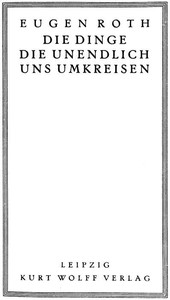
Die Dinge, die unendlich uns umkreisen by Eugen Roth
Eugen Roth’s “Die Dinge, die unendlich uns umkreisen” is the book you hand to someone who swears they don’t like poetry—then watch them disappear into it for an afternoon.
The Story
There’s no epic plot here, thank goodness. Instead, Roth hands us a collection of short, playful rhymes, each its own self-contained scene from the bizarre day-to-day. The “story” is just… living: waking up in a bad mood, being caught in traffic, faking a laugh at a party, dealing with that mysterious black box inside you called religion. Roth uses a simple, almost nursery-rhyme structure that bounces off the page, yet beneath each cheerful snort lies real depth—questions about god, loss, love, and the weird permanence of things you can no longer touch. The central conceit? That everything lost (a sock, a lover, a pet turtle) hasn’t left—it’s just slipped into permanent orbit around your life. You’ll meet the ill-tempered, the lonely, the drunk, the saintly, and the motorist who takes God to court.’
Why You Should Read It
Because it’s hilarious and sad and real. Roth doesn’t moralize. He doesn’t preach. He just describes how strange our human game is. His kindness toward imperfect people is what lingers; he forgives our trembling, pretending, failing little selves. The book reads like stand-up comedy by night, kindness text by morning. There’s one piece where a person fakes sleep to avoid her partner, caught in the dark, “thinking deeply, thinking nothing”—you have been there, and Roth makes that sad friction feel holy. Or when he compares dying women and their sleeping torturers to the kind of peace that takes us all. My favorite thing? He’s not afraid of being silly. A soul complains about unfair salary during a prayer, and listeners at a bar toast to their own distant charm. These poems give you permission to both cry and laugh, often on the same page. And some of his lines will unstick you—“Man is alive, according to set ways” or “One acts so self-lovingly through all the ages.” Cringey joy, revealed.
Final Verdict
If you have ever laughed at winter from the inside of a cozy window or felt that sadness when a festival ends, read this. If you enjoy walking the edge between sacred nonsense and everyday grace, read this. Also: fans of Henri Cole, Jane Kenyon, or the lighter, wry poems of Jack Gilbert will adore Roth’s tone. This is the book for exhausted optimists who still, somehow, celebrate the ridiculous mess. Short, weird, unexpected blazen-light of sorrow. I read one poem before bed when I need to breathe, and then for a while, everything has slightly dimples. Great things circle like miracles out of reach. So yes—let these things circle you.
This masterpiece is free from copyright limitations. You are welcome to share this with anyone.

Jennifer Garcia
11 months agoGreat value and very well written.