1

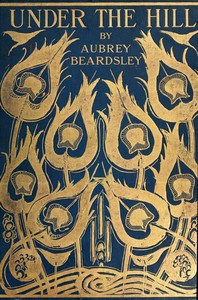
Under the Hill, and Other Essays in Prose and Verse — Inside the Classic
25
5
Project Gutenberg
2015
English literature -- 19th century; Beardsley, Aubrey, 1872-1898
Readers of public-domain and historical texts
Project Gutenberg digital edition
en
Edition facts
Words: 13,921
Reading time: 61 min
Text sections: 2
Source:
Project Gutenberg record #50060
Aubrey Beardsley's literary fragments reveal a decadent, ornate prose style that mirrors his visual art, blending mythological fantasy with arch humor in pieces like 'Under the Hill' and critical essays on art and literature.
Editorial Edition Score
4.5/5
★★★★★
★★★★★
Calculated from edition completeness, EPUB availability, text structure and catalogue metadata. Not a user rating.
Edition quality
Aubrey Beardsley, best known for his sinuous black-and-white illustrations, here turns his hand to prose and verse with a style as mannered and deliberate as his drawings. The opening of 'Under the Hill' introduces the Abbé Fanfreluche, a character whose toilet is described with the same fastidious attention Beardsley gave to a decorative border: 'the drying and delicious frictions that a bather finds his chiefest joys.' The prose is thick with sensory detail—chocolate, muslin, buns, a unicorn named Adolphe—and a playful, almost camp formality that treats the fantastical with deadpan seriousness.
This collection, assembled posthumously, includes not only the unfinished 'Under the Hill' but also essays on painters like Claude and Corot, a biographical sketch of Saint Rose of Lima, and a comic ballet scenario. The publisher's note recalls Beardsley's role as art editor of The Yellow Book, and the volume preserves the arch, knowing tone of the 1890s aesthetic movement.
The Abbé's World: Decadence and Delicacy
In 'Under the Hill,' Beardsley constructs a mythological realm where the Abbé Fanfreluche moves through rituals of bathing, dressing, and breakfasting with a unicorn. The language is deliberately precious: Helen's pet unicorn is 'milk white all over, excepting his nose, mouth, and nostrils,' and its cage is 'a pretty palace of its own made of green foliage and golden bars.' The prose lingers on textures and surfaces—'sweet white muslin frock,' 'spicy buns,' 'ivory hoofs'—creating a world that is both sensuous and artificial. Beardsley's dialogue is clipped and theatrical; Helen's line 'Adolphe is so jealous' is delivered with the same brittle elegance as a Restoration comedy. The effect is a kind of literary rococo, where every gesture is stylized and every object is a prop in an elaborate performance.
Art Criticism as Aesthetic Manifesto
Beardsley's essay on Claude Lorrain reveals his critical voice: sharp, opinionated, and dismissive of rivals. He calls Turner 'the Wiertz of landscape-painting'—a comparison to the Belgian painter of grotesque fantasies that is clearly an insult. His praise of Corot is couched in a hierarchy: 'Corot is Claude's only worthy rival, but he does not eclipse or supplant the earlier master.' The metaphors are literary: a Corot painting is 'like an exquisite lyric poem, full of love and truth,' while a Claude 'recalls some noble eclogue glowing with rich concentrated thought.' This is not neutral art history but a manifesto for a particular kind of refined, classical beauty, one that values control and tradition over the sublime excesses of Turner.
Sacred Biography and Ironic Distance
The piece on Saint Rose of Lima adopts a tone of mock-piety that is hard to read as entirely sincere. Beardsley quotes Mother Ursula's biography with apparent reverence—'to chronicle the girlhood of this holy virgin makes as delicate a task as to trace the forms of some slim, sensitive plant'—but the effect is undercut by the dry aside that 'a cheap reprint of the biography has lately been brought out by Chaillot and Son.' The juxtaposition of the 'ineffable and miraculous' with commercial reprinting is a characteristically Beardsleyan irony. He also cites Dubonnet's remark about girls 'well confirmed in all the hateful practices of coquetry,' a sentence that seems designed to shock or amuse. The essay hovers between hagiography and parody, never quite committing to either.
Fragments and Forms: The Ballet Scenario
The collection includes a 'comedy ballet in one act' by Philippe Savarat and Titures de Schentefleur, described in a memoir excerpt. The curtain rises on 'a remote Arcadian valley, a delicious scrap of Tempe, gracious with cool woods and watered with a little river as fresh...' The fragment breaks off, but the tone is consistent with Beardsley's other work: a pastiche of classical pastoral that is both lush and knowingly artificial. The ballet scenario, like 'Under the Hill,' suggests that Beardsley thought in terms of staged tableaux. His literary fragments often feel like descriptions of pictures or performances, complete with props, costumes, and carefully arranged lighting. The unfinished state of many pieces leaves the reader with a sense of a mind that worked in vignettes rather than sustained narratives.
Beardsley's literary remains are best approached as extensions of his visual imagination. The prose is dense with color, texture, and theatrical gesture; the essays are as much about style as about their ostensible subjects. Readers familiar with his drawings will recognize the same blend of elegance and provocation, the same delight in artifice. These fragments do not cohere into a conventional book, but they offer a rare glimpse of a visual artist thinking in words.
Reader reflection
How will you remember this book?
Save your reaction, strongest insight, and memorable passage.
Your progress
0
/
10
2
How much did you enjoy the reading experience?
3
Would you encourage someone else to read it?
4
How demanding did the text feel?
5
Would you read this book again?
6
Did the book give you something worth debating?
7
How would you rate its originality?
8
How clearly were the main ideas presented?
9
Which lesson or insight stayed with you?
10