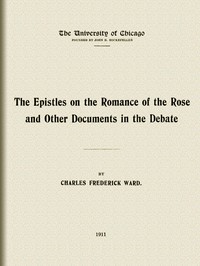
The Epistles on the Romance of the Rose, and other documents in the debate by Ward
Let's set the scene. In the late 14th century, two French poets wrote a massive, dream-vision poem called The Romance of the Rose. It was a blockbuster, a strange and elaborate guide to courtly love filled with symbolic characters. For over a century, everyone from nobles to scholars treated it as the ultimate authority on matters of the heart.
The Story
Then, in the early 1400s, Christine de Pizan, a professional writer and one of Europe's first feminists, read it. She didn't see a masterpiece; she saw a problem. She argued the poem was packed with nasty stereotypes about women and presented love in a cynical, manipulative way. She wrote open letters saying so, directly challenging the cultural giants of her day. This kicked off the 'Quarrel of the Rose.' Suddenly, learned men were scrambling to defend the poem, writing furious responses. Christine fired back, and a major public debate was born, fought through handwritten documents circulated among the French elite.
Why You Should Read It
What grabbed me was the sheer humanity of it all. Christine isn't some abstract historical figure here; she's sharp, frustrated, and brilliantly logical. Reading her letters, you can feel her exasperation. The men's defenses, meanwhile, range from thoughtful to hilariously condescending. Ward's book compiles these primary sources, so you're not just reading about the fight, you're reading the actual tweets and blog posts from 1410. The themes—how art influences society, who gets to speak, and the age-old tension between tradition and progress—echo loudly today. It makes you realize some arguments never really end; they just get new costumes.
Final Verdict
This book is perfect for anyone who loves history but hates dry textbooks. It's for readers who enjoy true stories about underdogs, for anyone fascinated by the roots of modern feminism, or for people who just like a really good, intellectual drama. You don't need to be a medieval scholar. If you've ever read something that made you angry and wanted to argue with the author, you'll get it. Think of it as the world's first recorded book club meeting where everything went wonderfully, passionately wrong.